Some of the most successful multifamily communities being built today offer more than apartments. They create places where residents can grab a cup of coffee, meet friends for dinner, walk to a fitness studio or simply enjoy spending time outside their front door.
That’s one of the reasons mixed-use developments continue to gain momentum. Developers aren’t just responding to market demand—they’re creating communities that feel connected to the neighborhoods around them.
While every project is different, mixed-use developments often combine residential, retail and public spaces in a way that encourages activity throughout the day. For residents, that can mean greater convenience and a stronger sense of place. For developers, it can create a community that remains attractive long after the first leases are signed.
Building these communities, however, requires more than adding retail space beneath apartment homes.
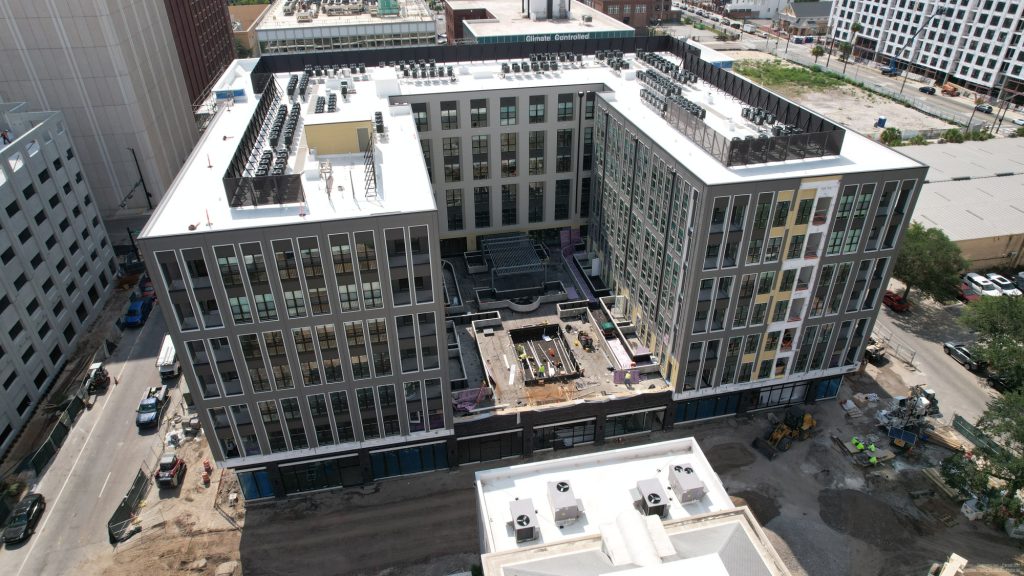
Mixed-use developments involve additional coordination between owners, architects, municipalities, utility providers, commercial tenants and construction teams. Site logistics are often more complex, schedules may include multiple phases and every component of the development needs to function independently while supporting the project as a whole.
That level of coordination makes early planning especially important.
Bringing the construction team into the conversation during design allows developers to evaluate constructability, site access, utility coordination and sequencing before work begins. Those discussions help identify potential challenges early, when adjustments are easier to make and less likely to affect schedule or budget.
The most successful mixed-use developments also recognize that every market is different. A downtown urban project will have different priorities than a suburban mixed-use community, and the needs of residents, retailers and the surrounding neighborhood will continue to evolve over time. Understanding those differences is just as important as understanding the building itself.
At FaverGray, we’ve seen how thoughtful planning and strong collaboration contribute to successful mixed-use communities throughout the Southeast. While every development presents its own opportunities and challenges, one principle remains consistent: the most successful projects aren’t measured by the number of buildings they include, but by how well every piece works together to create a place where people want to live, work and gather.